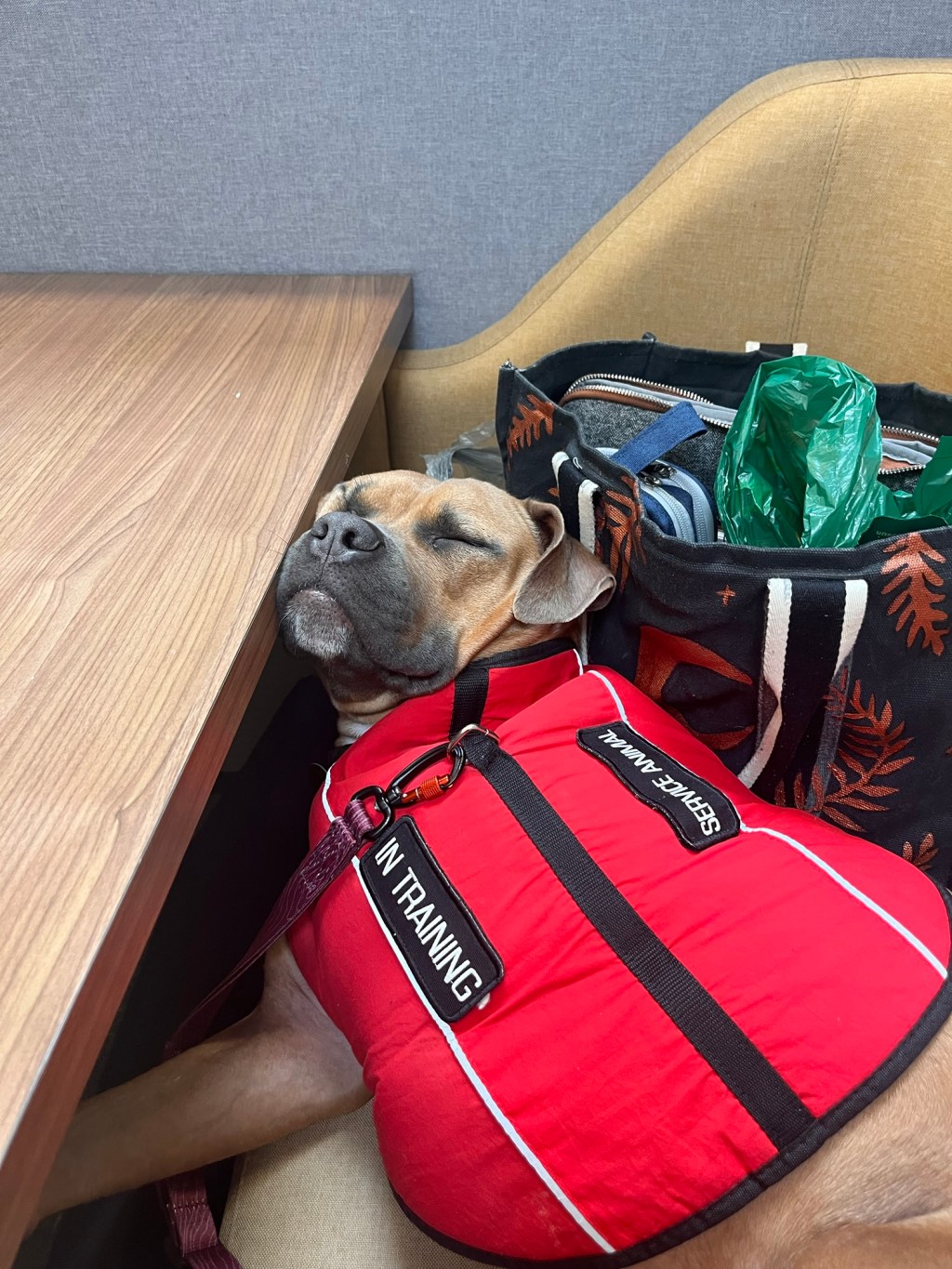
For many professionals with disabilities, service dogs are more than companions—they’re essential partners in navigating daily life. Yet despite growing awareness of disability rights, the workplace remains a complex terrain for service dog teams. From policy gaps to environmental hazards, the challenges are often subtle, systemic, and solvable—if we’re willing to listen.

In honor of my last week at my summer internship, I want to go over what went right, and what went wrong in terms of having a service dog in the workplace. There are lots of things that I wish I would have known, and wish my employer would have known before I started this journey.
Legal Protections vs. Practical Realities
Under the Americans with Disabilities Act (ADA), service dogs are legally permitted in most (technically all) workplaces. But legal access doesn’t guarantee functional inclusion. Many handlers report:
- Lack of awareness: Coworkers and managers may not understand service dog etiquette or the handler’s rights.
- Inconsistent policies: HR departments may struggle to distinguish service dogs from emotional support animals, leading to confusion or delays.
- Limited accommodations: Break schedules, workspace layout, and emergency protocols often overlook the presence of a working dog.
Education is key. Employers should proactively train staff on service dog etiquette and ensure that accessibility policies include animal-related considerations. I had the most trouble with this part of my internship.
The coworking space that hosted the company I worked for did not understand proper service do etiquette and asked me to restrict my access to the public workspace because of Trace. They asked me to first make sure Trace was clear of walkways (easy enough) but the said that he couldn’t under tables or on bench furniture. This leaves literally nowhere for him to sit. So, I asked them about it, and they said it would be easier if I restricted my access to the coworking space and only used the small communal office my internship owned.
My internship paid for me to use this space. No other interns were asked to stay out of shared office space. I’d like to point out, they never would have had this commentary if I had a wheelchair instead of a service dog. Regardless of whether or not the disability is visible, service dog-handler teams have rights to public spaces, especially those they pay to use.
Environmental and Infrastructure Challenges
Office environments aren’t always designed with service dogs in mind. Common issues include:
- Crowded layouts: Tight cubicles or cluttered walkways can make navigation difficult for teams.
- Unsuitable flooring: Slippery surfaces like polished concrete or tile can be hazardous for dogs, especially those performing mobility tasks.
- Lack of relief areas: Handlers may need to leave the building premises entirely for their dog’s bathroom breaks, which can be disruptive and exhausting.
Solutions can be simple: designate pet relief zones, provide non-slip mats, and allow flexible seating arrangements that accommodate both handler and dog. This simple act can change how service dog teams navigate the workplace and make the experience better for all.
Heat, Hygiene, and Workplace Safety
Service dogs are vulnerable to environmental stressors—especially in buildings with poor ventilation or outdoor workspaces. During summer months, heat exposure becomes a serious concern:
- Overheated pavement: Dogs may need to cross hot parking lots or sidewalks to reach the building.
- Limited cooling options: Not all offices allow fans or cooling mats, which can help dogs regulate temperature.
- Sanitation concerns: Trash bins, food spills, and cleaning chemicals can pose health risks to dogs working in shared spaces.
Employers should consider seasonal adjustments, such as shaded entryways, hydration stations, and pet-safe cleaning protocols. At my internship, I wasn’t allowed to give water to Trace inside, because the owners of the coworking space thought that it would make an “undue mess” and be unappealing to other customers. I had to give him water outside, every day, for ten weeks. This added extra time out of the office and unnecessary stress for both of us.
Emotional Labor and Social Dynamics
Service dog handlers often shoulder invisible emotional labor. They may face:
- Unwanted attention: Curious coworkers may distract the dog or ask intrusive questions.
- Isolation: Some handlers feel excluded from team activities due to their dog’s presence or others’ discomfort.
- Advocacy fatigue: Constantly educating others about their rights and needs can be draining. I got asked about Trace at least twice a day. That’s a lot of time dedicated to explaining my disability to people who were often intrusive and occasionally unkind.
Creating a culture of respect means normalizing service dogs in the workplace—not treating them as novelties or exceptions. If you know someone with a service dog in your workplace, treat them like you would anyone else.
Building a Truly Inclusive Workplace
To support service dog teams, employers can:
- Develop clear, inclusive policies that distinguish service animals from pets or ESAs
- Offer orientation materials and training for all staff
- Design workspaces with accessibility in mind, including dog-friendly zones
- Encourage open dialogue and feedback from handlers
Service dogs empower professionals to thrive—but only if the workplace is ready to meet them halfway. Inclusion isn’t just about access; it’s about dignity, safety, and belonging. And that starts with listening to the people who live it every day.
After two months of constantly fighting with my internships coworking space for equal access, I’ve learned a lot about myself and workplaces that label themselves as inclusive. Advocacy is tiring, but worth it when we think about those who will come after us, and hopefully the lives we’ve impacted along the way. You don’t have to compromise your career dreams because of your disability, you just have to persevere.
Trailblaze on!
— Kaya and the Trailblazing Unleashed Pack
 Trailblazing Unleashed
Leave a comment