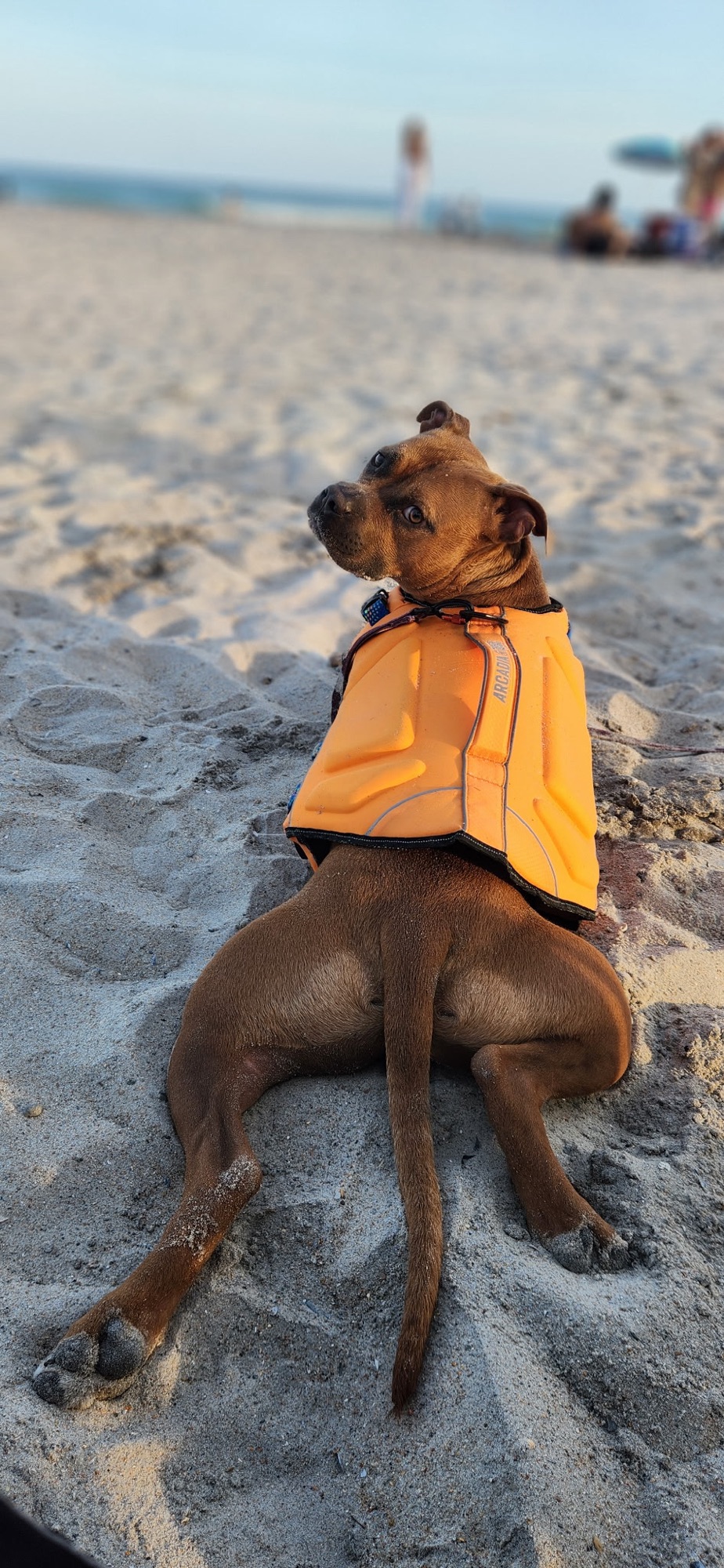
This week, the Trailblazing Unleashed team is in Hilton Head South Carolina, and we’ve been LOVING the beach. Trace loves the sand and swimming, and I’ve always loved the water. We’ve been learning how to navigate the warm weather and water friendly activities for both people and pups.
Whether you’re heading to a secluded shoreline or a popular coastal park, here’s how to make sure your beach day is safe, enjoyable, and accessible for every member of the pack.
Pre-Beach Prep: Pack Like a Pro
Before you leave, double-check the essentials:
- Fresh water & collapsible bowl: Saltwater is dehydrating and can upset your pup’s stomach. I forgot this one last time and he ended up stealing my water bottle.
- Dog-safe sunscreen: Yes, it’s a thing! Apply to exposed areas like the nose and ears (especially for short-haired breeds). I didn’t know this was a thing, but you can bet we’re picking some up.
- Shade source: Pop-up canopy, beach umbrella, or a breathable towel tent.
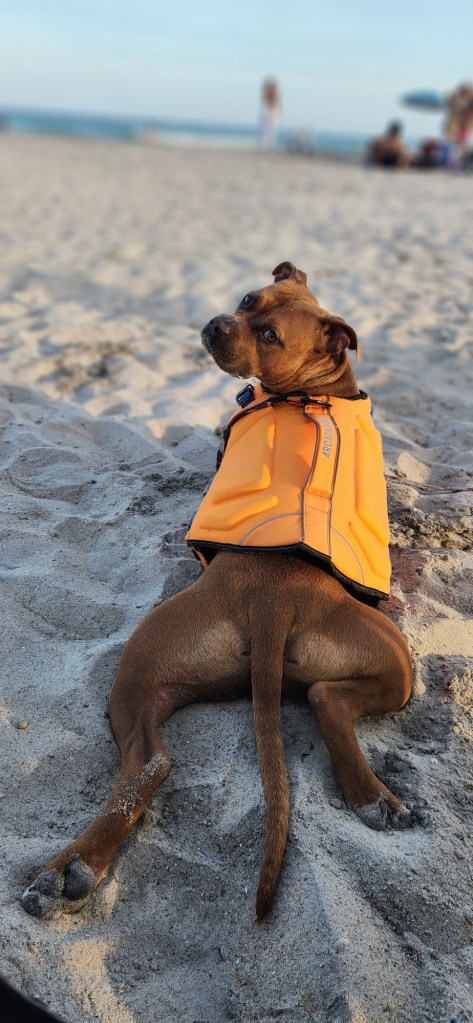
- Floating leash or waterproof gear: Keeps them safe in the water without restricting movement. I would also recommend a life vest if your pup is a swimmer or has a limb difference like Trace.
- Dog ID tags & updated microchip info: Beaches can be chaotic — better safe than sorry. Make sure your contact info is on their tags!
- Service dog gear: some beaches don’t allow dogs, but your service can go wherever you do! Make sure to have their vest on hand.
At the Beach: Reading the Environment
1. Check the rules Not all beaches welcome dogs, and leash laws vary. Look for signage or check online before heading out. Some locations offer designated off-leash hours or zones.
2. Watch the heat Hot sand can scorch paw pads. If it’s too hot for your bare feet, it’s too hot for theirs. Try early morning or late evening visits, and bring booties if needed.
3. Hydration breaks Offer fresh water every 20–30 minutes. Dogs may instinctively drink from the ocean — watch for signs of saltwater poisoning like vomiting, diarrhea, or fatigue.
4. Respect wildlife Keep your dog away from nesting birds, turtle habitats, jellyfish, and washed-up fish. Their instincts to sniff and snack might put them at risk.
5. Keep it clean Bring poop bags and dispose of waste responsibly. Many beaches have composting stations or dedicated pet waste bins. We forgot this last time, and it’s pretty awkward just standing there by a pile of poop waiting for a friend to grab a bag.
Swimming Smarts
Even water-loving dogs need supervision. We’ve talked about this before in our tripawd training articles, but in case you forgot., here’s why:
- Rip currents and tides can disorient or pull them far from shore.
- Waves may overwhelm smaller breeds, especially those with short legs or flat faces. This is also true for Tripawds like Trace with a front leg limb difference.
- Not all dogs can swim. Breeds like bulldogs, pugs, or dachshunds may struggle in deep water. Bring a life jacket!
Tip: Consider a canine life jacket with a handle to help lift them from the water if needed.
Post-Adventure Care
- Rinse off sand and salt to prevent skin irritation and itchy paws.
- Check for cuts or burns between toes or along the belly.
- Monitor for sunburns or heat exhaustion during the evening wind-down.
- Offer extra hydration and a cool resting place.
Trailblazer Reflections
The beach is more than a playground — it’s a shared habitat. Modeling respectful pet ownership means advocating for wildlife, protecting our dogs, and leaving no trace behind.
Let your pup feel the freedom of the sea breeze, but stay grounded in the responsibility it takes to keep them safe.
Because adventures should be joyful — not risky. And we should treat our favorite nature-based adventure spots with respect, so they can be enjoyed for years to come!
 Trailblazing Unleashed
Leave a comment