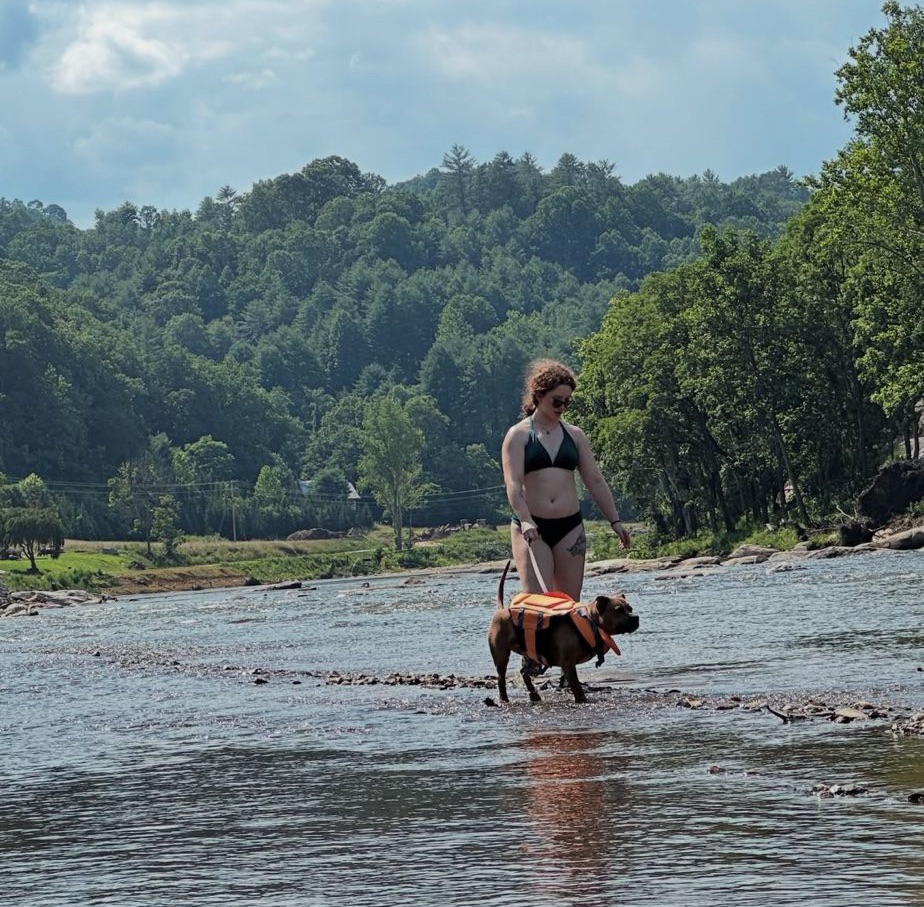
There’s nothing quite like watching a dog paddle across a lake—ears flapping, tail wagging, pure joy in motion. And for tripawd dogs, that joy is just as real. Trace has been relearning how to swim over the past few weeks, and we have been loving this new summer activity!

Whether your pup lost a limb due to injury, illness, or birth conditions, the water can be both therapeutic and wildly fun. With the right prep and perspective, swimming can become a favorite activity for dogs with three legs—and a gateway to deeper connection, strength, and freedom.
However, for pups like Trace who lost a front leg, the doggie paddle has changed a lot! In this post, I want to talk about why you should be taking your Tripawd pup swimming, and how to make it as amazing as possible.
Why Swimming Is Great for Tripawds
Lots of dogs love swimming! But what you may not know is that it can be incredibly good for their health. Water supports the body and reduces joint impact, making swimming a fantastic form of low-impact exercise. For tripawd dogs, it helps:
- Build strength and balance in remaining limbs
- Improve cardiovascular fitness without joint stress
- Boost confidence and mental health through active play
- Provide relief from heat, especially in the Southern summers we know so well
That said, not every dog automatically loves the water. Introduce it slowly, positively, and on your dog’s terms. We have several posts on tripawd training tips, that you should check out if you’re interested! If your dog has a good relationship with the water already, the next hurdle is finding a place to swim.
Choosing the Right Water Spot
Safe swimming starts with smart location choices:
- Look for calm, shallow entry points—gentle lake shores or shallow streams are ideal for new swimmers
- Avoid fast-moving currents, steep banks, and areas with algae blooms or debris
- Check for dog-friendly signs and leash rules, especially in popular parks
If you’re adventuring with a service dog, ensure the area allows for controlled entries and exits. Accessibility matters for handlers, too—don’t forget about stable footing and shaded areas.
If your dog is more comfortable with swimming already, you are welcome to try deeper waters and more adventurous locations. Always keep a close eye on your pup and their body language to make sure they are comfortable and content.
Must-Have Gear for Tripawd Swimmers
Even water-loving tripawds can benefit from a little extra support:
- Canine life jackets: These are non-negotiable for safety and independence. Choose one with a belly strap that doesn’t chafe and a top handle to help lift your dog if needed.
- Slip-proof booties (optional): For dogs missing a rear leg, traction on slippery rocks or ramps can make entry and exit easier.
- Cooling towel or shaded towel station: Post-swim recovery is important, especially on hot days.
Make sure gear is properly fitted and try it on land before heading to the water. Bonus tip: practice short “dry runs” with the vest to build positive associations. Trace LOVES his life jacket, and gets very excited when he sees me bring it out. This is the kind of connotation and reaction you want!
Pacing the Splash
Just because swimming is low-impact doesn’t mean your pup won’t get tired—tripawed dogs often work harder to stay balanced in the water:
- Keep initial sessions brief: 5–10 minutes is plenty for beginners
- Encourage breaks and let your pup exit the water frequently. You can also let them relax in shallow water as well.
- Watch for fatigue signals: slowing down, paw flailing, or head dipping too low
Let your dog set the pace—and when they’re done, respect that. Rest is part of the adventure.
Emotional Encouragement Matters
Confidence grows with trust. Stay upbeat and calm, especially during your first few outings. Reward with treats, affection, or play after each swim attempt—even if your dog only dips a paw in.
Dogs pick up on our mood, so showing enthusiasm (without pressure) reinforces that water is a fun, safe space.
Clean Up and Trail-Ready Tips
- Rinse off mud, chlorine, or salt water to avoid skin irritation
- Dry thoroughly, especially around the amputation site or any scar tissue
- Watch for soreness the next day—some stiffness is okay, but limping or behavioral changes warrant a vet check
- Update your trail kit with a microfiber towel, collapsible bowl, and wound spray (just in case)
If you’re camping or road-tripping, make swim days easier with shaded rest zones and quick access to towels and water.
Swimming with a tripawd dog isn’t about limitations—it’s about liberation. With three legs and a lot of heart, these pups teach us how to dive in boldly, adapt gracefully, and find joy in the ripple of each new experience.

New experiences can be exciting and impactful for both you and your pup, but being properly prepared is a vital step to any successful adventure.
Enjoy the summer sun and Trailblaze on!
— Kaya and the Trailblazing Unleashed Pack
 Trailblazing Unleashed
Leave a comment