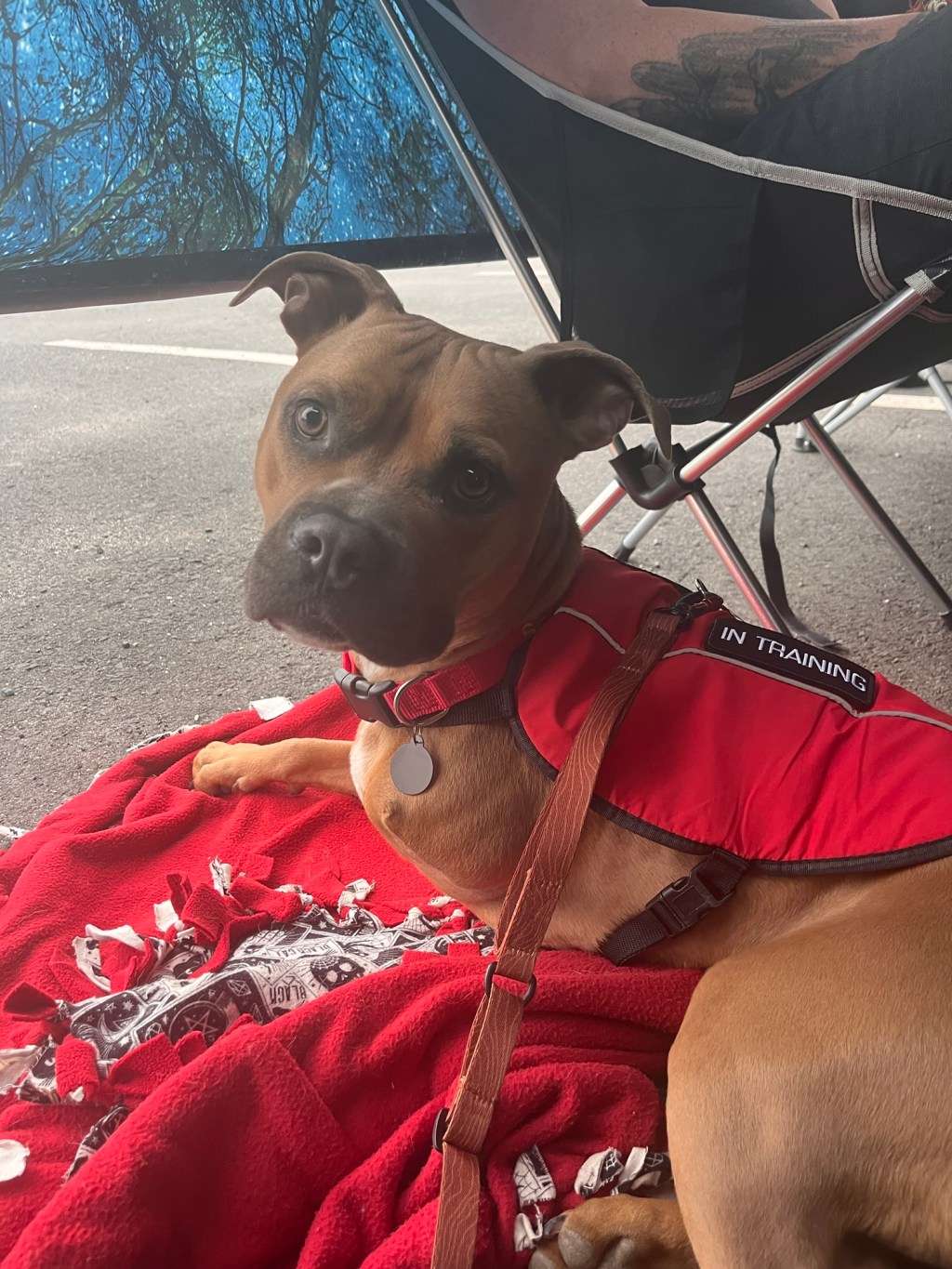
Over the past few weeks, I have been learning how to approach adventure as someone with a service dog! This has been an incredibly exciting expereince, but an overwhelming one at points as well. As the summer picks up and more adventures start to pop up, I’ve been wondering about how to navigate travel with Trace. Luckily, with a little bit of research I’m feeling a whole lot better about the whole thing!
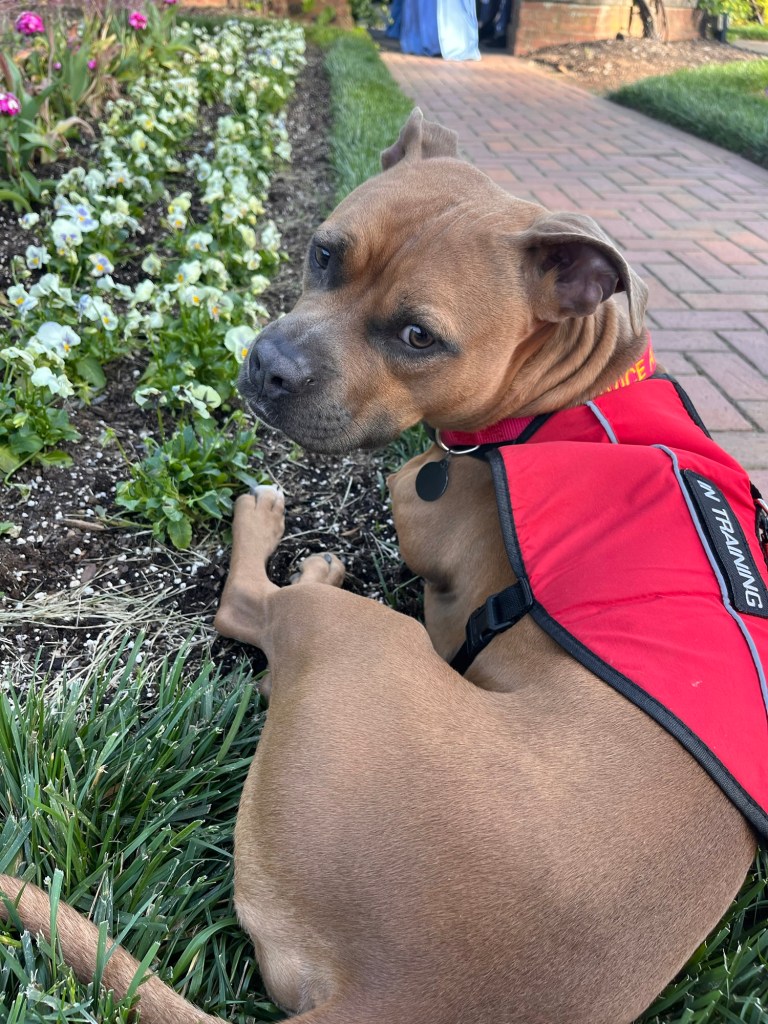
Here is a comprehensive guide to traveling with your service dog, from a novice handlers’ perspective.
Understanding Your Rights
Before you embark on your journey, familiarize yourself with the laws protecting service dog handlers:
- Americans with Disabilities Act (ADA): In the U.S., service dogs are allowed in most public spaces, including restaurants, hotels, and airports. Businesses cannot charge extra fees or demand documentation.
- Air Carrier Access Act (ACAA): Airlines must accommodate service dogs for free, though some require advance notice and forms.
- International Laws: Regulations vary by country—some require vaccinations, quarantine, or additional paperwork.
Knowing these laws empowers you to advocate for your rights confidently. Make sure that your service dog is registered through a legal service before taking them anywhere! This can help you feel more secure and give you legal standing in new locations.
Pre-Trip Preparations
Before departure, ensure you’re set up for success:
✔ Check airline, hotel, and transportation policies regarding service animals. They aren’t able to restrict your travel any more than anyone else’s, however, it’s important to know what documentation you may need before you leave.
✔ Pack necessary supplies, including food, collapsible bowls, waste bags, and a comfort item. As you pack for yourself, make sure that you’re packing for your pup too. Traveling can be just as stressful for them as it is for you.
✔ Ensure ID tags and paperwork are accessible in case verification is needed. This connects back to our first check point. Make sure you know what documents you may need so you can have them readily available. Often, a service dog ID will be enough with an identification collar or vest. However, this may vary from location to location.
✔ Plan for rest stops when traveling long distances—your service dog will need breaks just like you do. However, service dog bathrooms are significantly harder to find in airport and other locations!
Navigating Airports and Flights
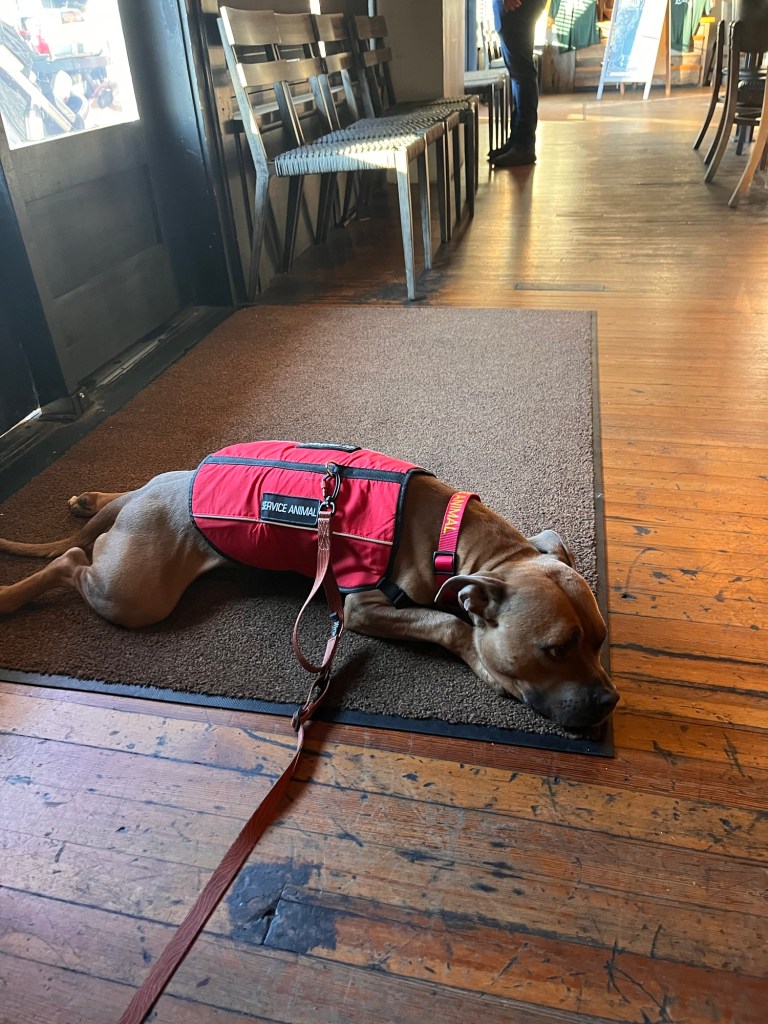
According to my research, air travel with a service dog presents unique challenges, but proper planning can make it easier:
- Security Screening: At TSA checkpoints, service dogs walk through metal detectors with handlers. If further screening is required, agents should not separate you from your dog. Once again, make sure you know your rights.
- Cabin Comfort: Dogs generally sit at their handler’s feet. On smaller aircraft, booking bulkhead seats may provide extra space. If you have a larger service dog like I do, make sure you purchase a ticket with ample space for you both. Also note that those who have service dogs cannot occupy seats in front of emergency exits.
- Preparing for Long Flights: Bring water, treats, and a potty pad in case of delays. It’s not ideal, but when nature calls, you have to be prepared!

Hotel Stays with a Service Dog
Most hotels allow service dogs without extra fees, but it’s still wise to:
- Inform the hotel upon booking to ensure a smooth check-in.
- Bring a familiar blanket or mat for comfort.
- Prevent disruptions by practicing quiet behavior.
If your service dog is still new to the idea of travel and hotels, bring extra training equipment as well. This can look like treats, a favorite toy, harnesses, and leashes. This can be a stressful experience for you both, so it never hurts to be prepared!
Public Spaces & Transportation
When moving through crowded areas, such as buses, trains, and tourist spots:
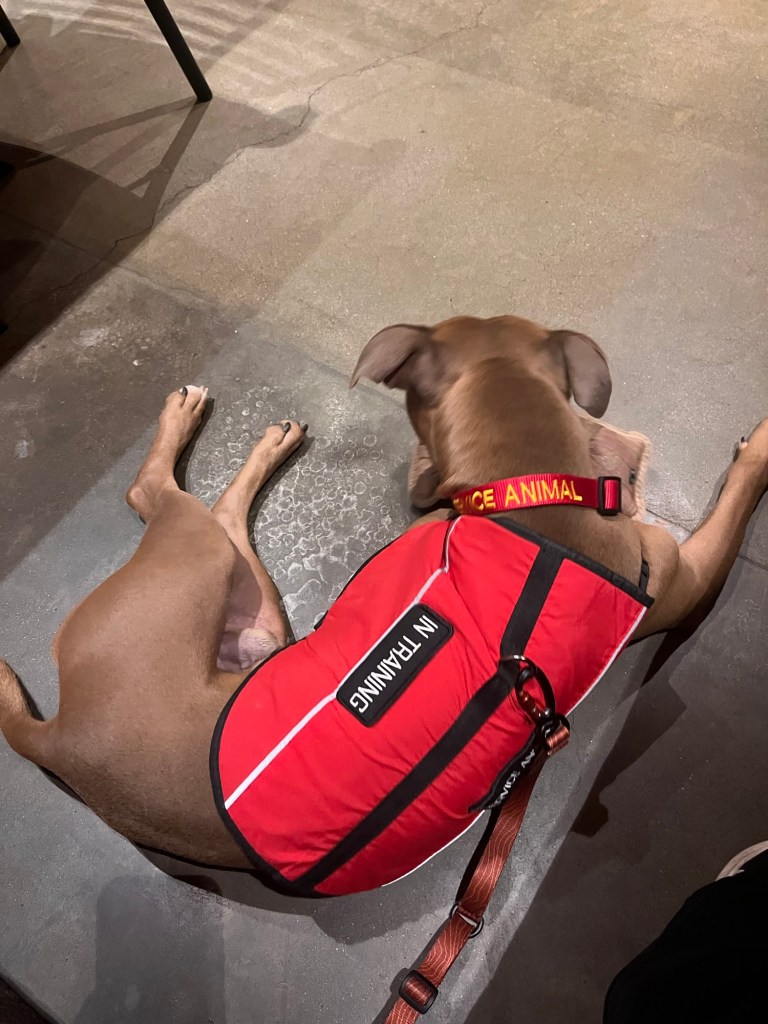
✅ Remain aware of your surroundings to ensure your dog isn’t obstructed or stepped on. Crowded areas can be stressful, and your dog must feel safe with you at all times. Make sure you’re paying extra attention to you’re surroundings.
✅ Be prepared to educate others who may not understand service dog etiquette. If you’ve done this before, you know that there are always going to be some people who want to pet your service dog. It’s annoying at best and disruptive at worst. You should be ready to intercept curious children and god forsaken self-proclaimed “dog people” who think that existing gives you a right to pet other people’s dogs without permission.
✅ Ensure proper identification, such as a vest, if it helps reduce unwanted interactions. I don’t love Trace’s service dog vest because it doesn’t fit him quite right as a Tripod. However, people are far less likely to ask me to pet him if they can easily identify him as a service dog. Choose your battles wisely, and do what makes you comfortable.
Common Challenges & How to Handle Them
Even with laws in place, some businesses or individuals may challenge service dog access. If confronted:
- Stay calm and assertive—explain your rights clearly. You know your rights better than anyone else. Make sure that you stay kind, but assertive.
- Ask for a manager if necessary. I know this sounds like a pretentious thing to do, but sometimes it’s necessary.
- Have backup documentation, even if not legally required, as some international locations request it. I like to keep Trace’s service dog ID on me at all times when we’re out in public.
Most importantly remember: You have a right to public spaces. Being disabled and having a service dog do not make you any less deserving of time, space, and respect.
Final Thoughts
Traveling with a service dog may require extra planning, but the reward of exploring new places together is worth it. I know it can be scary but feeling safe and healthy is more important than your fears.
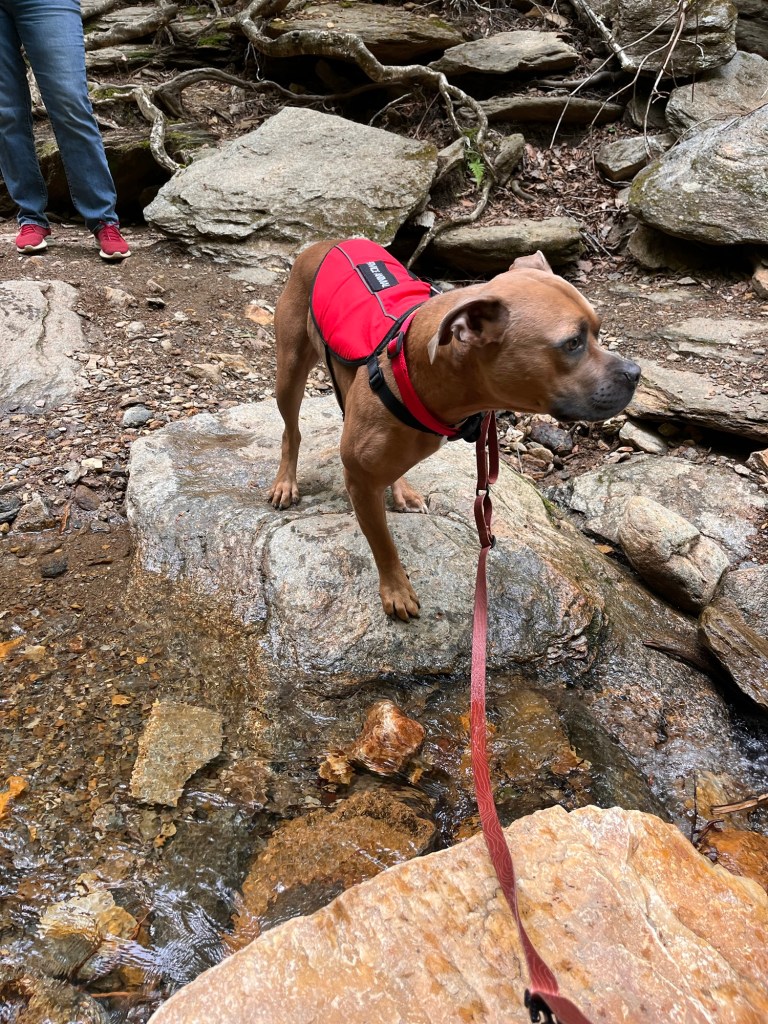
With knowledge of your rights, preparation, and confidence, you and your service dog can enjoy stress-free adventures!
Trailblaze on!
–Kaya and Trace
 Trailblazing Unleashed
Leave a comment